Monday, 25 November 2019

Supercharge Your Small Business with Video Marketing – Today!

[block]10[/block]

If you’ve got a small business—let’s say a startup or one that’s taking its first cautious steps—it’s normal to worry about your odds of success.  After all, most new businesses don’t make it out of the starting gates—in fact (according to Medium), about 90% fail. That applies to all kinds of businesses—from small ones to large enterprise organizations, local ones, and national ones—businesses straddling virtually every industry sector.

That so many new businesses can’t get traction is an unfortunate fact of life.  But the operative issue for your business isn’t how many fledgling companies don’t make it—it’s what you can learn from those that fail—and from those that succeed.

Did Someone Say The “M” Word?

Those that don’t make it to their second year hit the skids for all sorts of reasons. For some, it’s poor leadership and an unwillingness to delegate authority. For others, it’s the lack of a solid business plan, and others still simply run out of cash. But for many, the problem is anemic marketing.

That’s understandable. Getting a grasp on the complexities of all the marketing channels available to them—everything from social media to search engine optimization (SEO), pay-per-click (PPC) advertising, branding strategy, website audits, and review generation—might not be rocket science, but it can seem just as challenging, especially if this is your first go at digital marketing.

How About a Game Changer?

person wearing white sweater carrying large sony camera

The fact is, there’s no silver bullet when it comes to creating a solid digital marketing strategy (though for newbies, partnering with an experienced digital agency is about as close as you’ll get to one).  But there are some strategies that, when properly leveraged, are so effective they can take prospective customers by surprise, create an enduring, emotional bond with them, build trust, and take your business to the next level.  Those strategies are game changers—and one of them is video marketing.

They Said it Couldn’t be Done

Simply stated, video marketing is so powerful it can take you from questioning the longevity of your business to wondering how high to set the bar for success. Sound impossible? Then it’s time for a story (spoiler alert—it’s a true one).

Imagine you’re a guy with a great idea for a new business—meaning you’ve found a gap in the marketplace no one else has filled. It’s a simple idea—like, guys hate shaving, and they hate constantly having to replenish shaving supplies and paying through the nose for the privilege. So, you’ll deliver those supplies right to their front door—and you’ll do it on the cheap.

The year is 2011, the guy with the idea is Michael Dubin, and the business at issue is Dollar Shave Club (DSC). Dubin’s sitting in his office thinking about ways to show other guys how great his idea is when a couple of cocky marketing types burst through the door.  They tell him they can take his initial $100,000 investment and triple it in a couple of short years. Dubin is, let’s say, less than bowled over. That’s when they show him the video (you owe it to yourself—and your business—to check it out).

It surprised him. He didn’t expect the edgy humor. He certainly didn’t expect the tagline (“Our blades are f**king great”).  But what he really didn’t expect was how perfectly that video captured his attention—and his brand promise—in just over 1 minute and 30 seconds.

Well, cut to the chase—the marketing guys were wrong. They didn’t triple his investment. They turned his $100,000 into $1 billion just 5 years later. 

OK, But That’s Just One Company

Now, it wouldn’t be fair to say that their video marketing campaign was the only reason DSC took off like a rocket—but it is fair to say that video was the fuel that got it off the ground.

And here’s the thing: Dollar Shave Club, although an outlier in the extent of their success, isn’t alone in leveraging the power of video marketing.  Consider, for example, these video marketing metrics from WordStream:

  • More than half of marketers around the globe say video marketing creates the highest return on investment (ROI)
  • The marketers who leverage video increase revenues by almost 50% faster than those who don’t
  • Video, on average, pushes website traffic from organic search results almost 160% higher
  • When you include video on a customized landing page, you increase conversions by 80% or more
  • Embedding a video into an email increases click-through rate by almost 100%

This is how HubSpot (no slouch when it comes to succeeding with inbound marketing) talks about the power of video—and why it needs to be a central component of your digital marketing mix:

“Brands need a video marketing strategy — this idea isn’t new. What has changed is how important video has become on every platform and channel.  Video is no longer just one piece of your overall marketing plan. It’s central to your outreach and campaign efforts …Why is this important? If you aren’t creating video, you’re likely falling behind. But don’t fret. For most videos, the more simple and raw it is, the more authentic the content seems … and that’s what really matters to your audience.  Better yet, video production is more cost-effective than ever — you can shoot in high-quality, 4K video with your smartphone.”

Getting Video Marketing Right        

So, what’s the bottom line? It’s this: video marketing is powerful.  It’s powerful because there’s no more effective way to polish your brand, create an immediate and palpable emotional connection with your target audience, highlight the quality of your products (whether they’re luxury homes or inexpensive blades), capture and hold the attention of prospective customers, conserve precious marketing dollars—and take your business to the next level.

Now, here’s the rub—not every video is that game-changer your business needs. The eye-popping metrics above reflect average performance, meaning some businesses don’t do nearly so well—and some do a whole lot better.

It all comes down to execution—putting the right video in front of the right audience at just the right time. Equally important, the videos you produce don’t exist in isolation—they’re part of a larger, unified digital marketing strategy, the whole of which is greater than the sum of its parts.

Creating that unified digital strategy can be challenging—but the stakes couldn’t be higher, as it might just spell the difference between taking your business to new heights and watching it join the ranks of the failed. And that’s where we can help.

To learn more about the ways our comprehensive menu of digital marketing services can take your small business to the next level, contact us today.

The post Supercharge Your Small Business with Video Marketing – Today! appeared first on LocalBizGuru.com.


source https://thebtrade.com/2019/11/25/supercharge-your-small-business-with-video-marketing-today/?utm_source=rss&utm_medium=rss&utm_campaign=supercharge-your-small-business-with-video-marketing-today

Sunday, 24 November 2019

How to Create an Editorial Calendar for Content Marketing

Content marketing runs on editorial content. And in order to publish high-quality content at a regular cadence, you need an editorial calendar.

An editorial calendar serves several purposes; it helps you to:

In this post, we’ll give you a step-by-step walk-through for creating an editorial calendar that will achieve all those functions and streamline your content marketing process. We’ve formatted it to address many frequently asked questions that marketers often have when creating an editorial calendar for the first time. We’ve also included a template that you can download and use for your editorial calendar.

Where should I create my editorial calendar?

Your first question may be where to create your editorial calendar. The format of your calendar will depend on your organization.

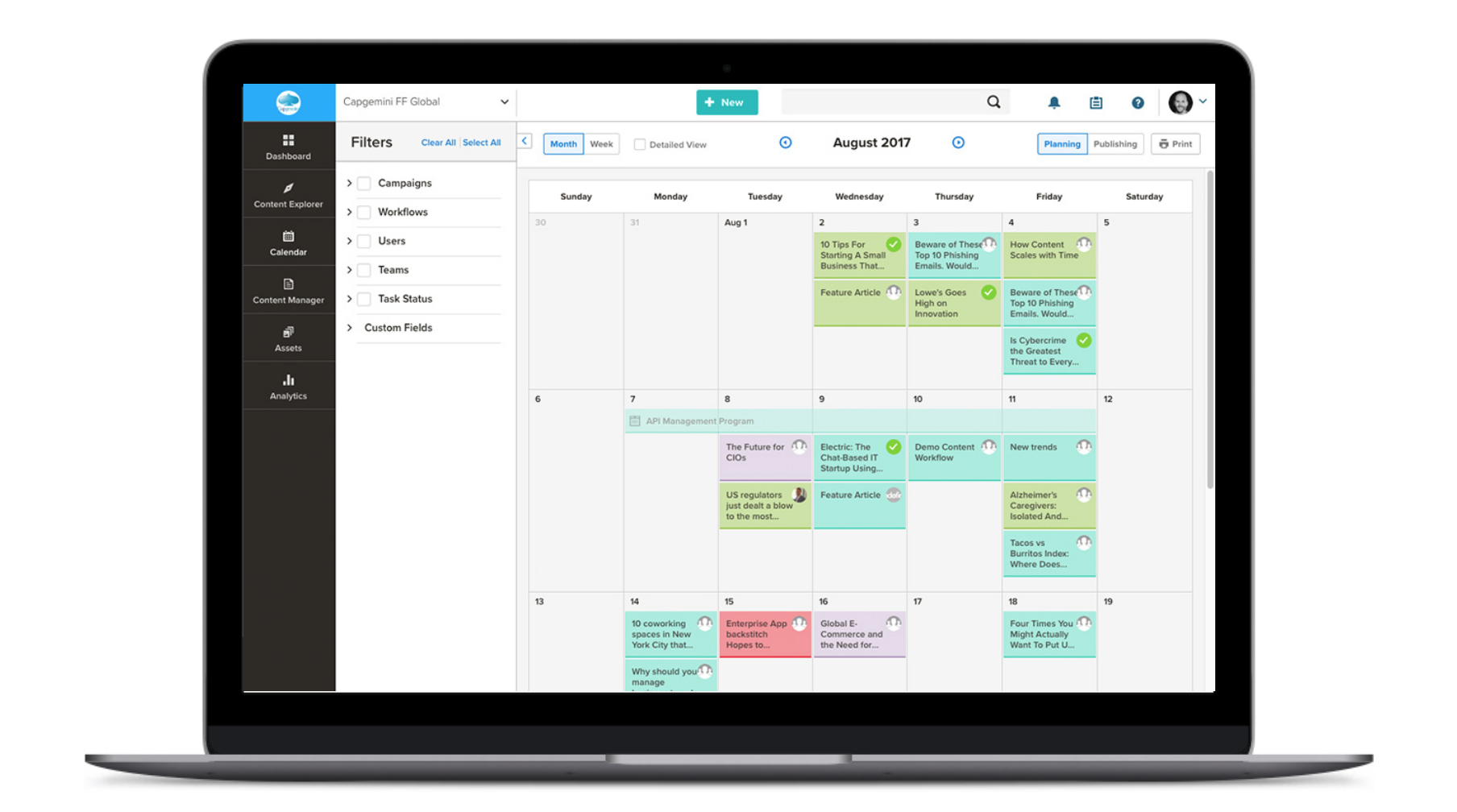
Your team may have access to a content marketing platform, like NewsCred’s. Most content marketing platforms have built-in editorial calendars that let you create workflows for blog posts and other pieces of content, plot them on a calendar, and manage all the writing, editing, publishing, and distribution in one place.

NewsCred CMP editorial calendar.png

An editorial calendar in the NewsCred Content Marketing Platform

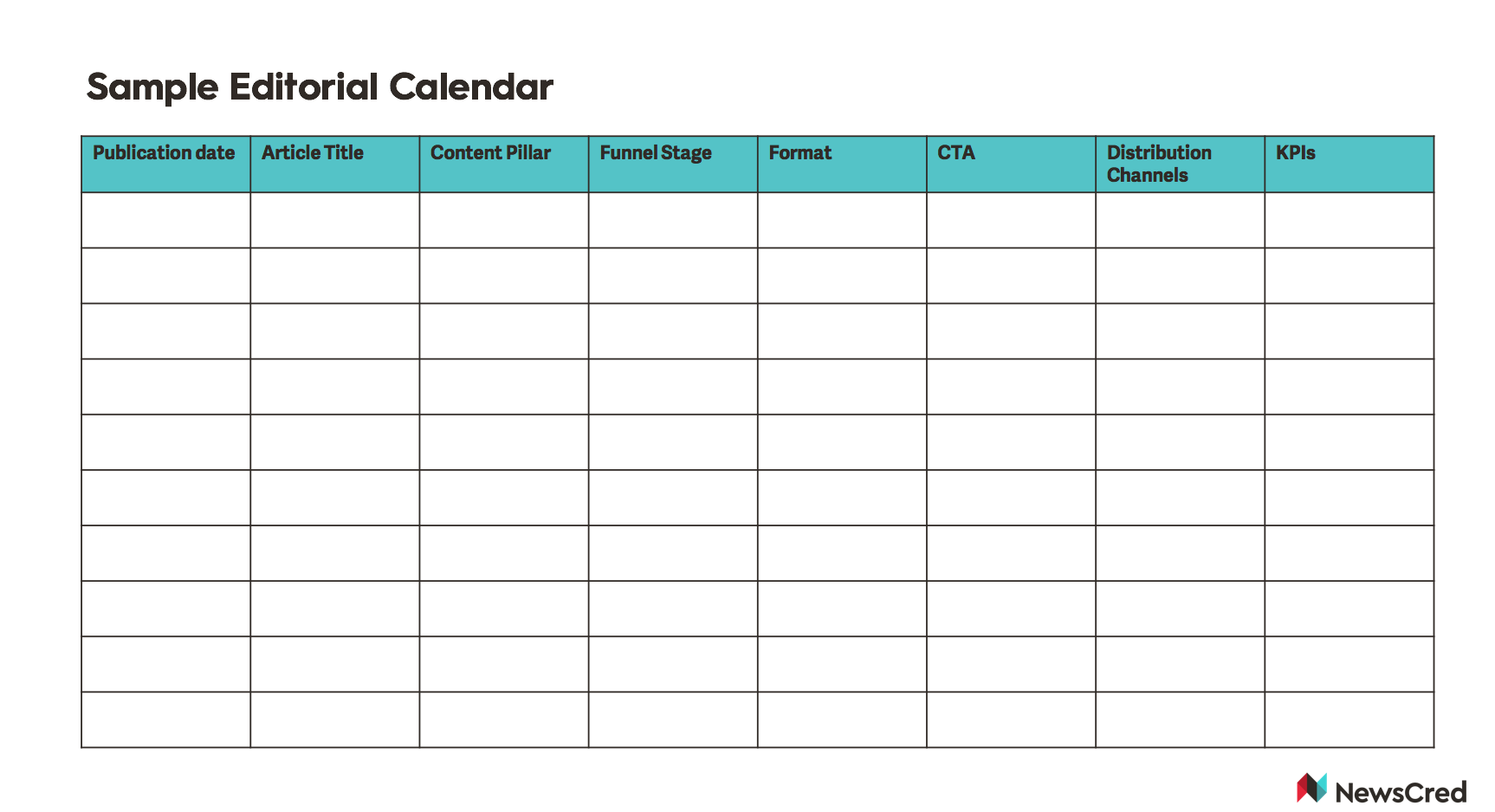
If you don’t have a content marketing platform, a Google Sheet or Excel spreadsheet can serve as your calendar. Create a dedicated workbook for one year and within that spreadsheet, designate one tab for each month. Use this template as a guide for formatting your calendar:

sample editorial calendar.png

(Download this template from our content marketing strategy template here.)

Of course, feel free to adapt the template so it suits your needs.

How do I align my editorial calendar with my content marketing strategy?

When you created your documented content marketing strategy, you essentially laid the foundation for your editorial calendar. After all, your content marketing strategy ensures that all the content you produce will result in positive ROI toward your content marketing goals.

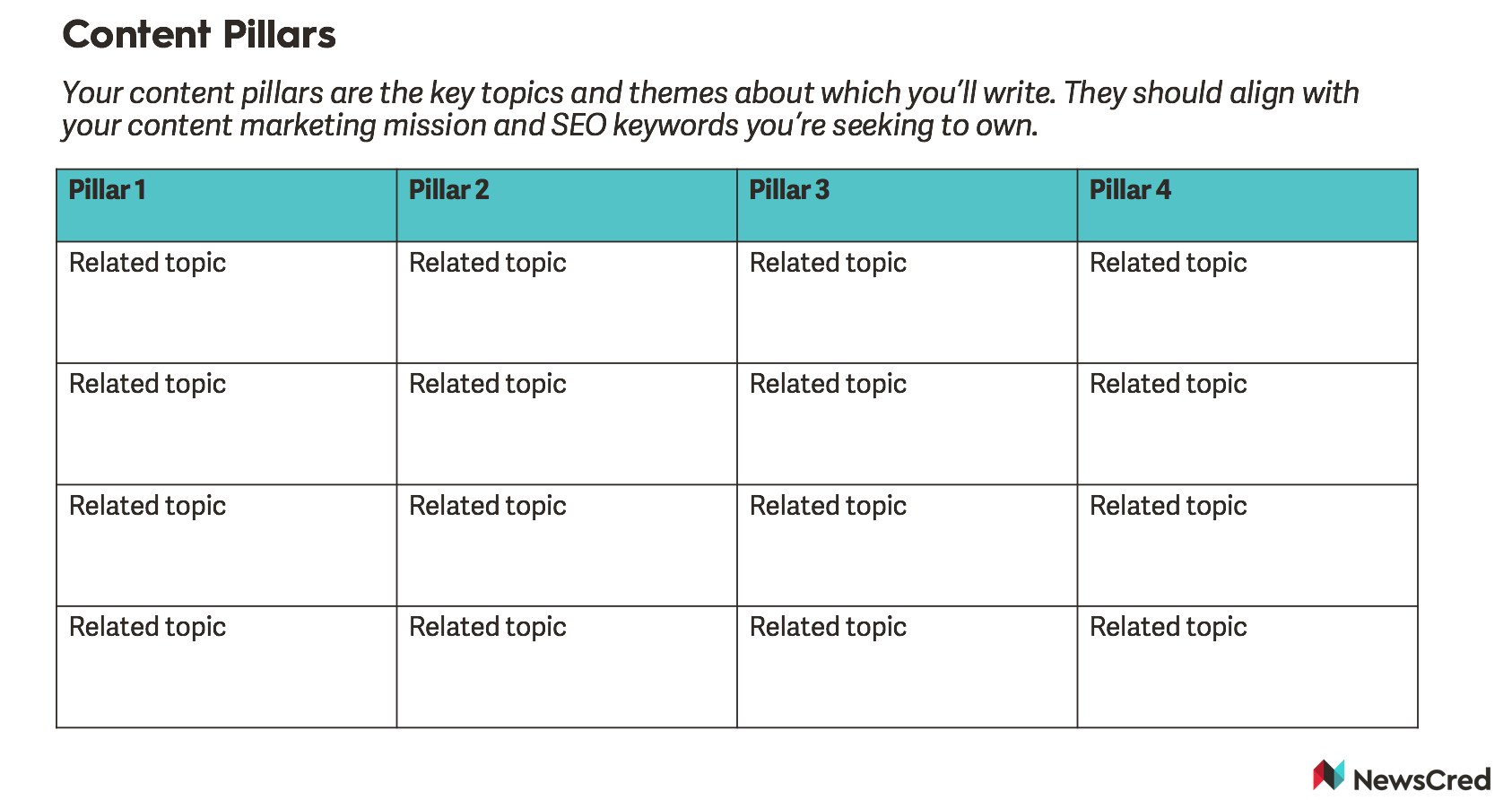
In your content marketing strategy, you established content pillars, which are the core topics that you’re seeking to own.

These pillars align with your brand mission and the SEO keywords for which you’re hoping to rank. Within each pillar are related topics. For example, if you’re a fitness company, one of your content pillars might be “Nutrition and Healthy Eating.” The related topics for that pillar might include “meal plans,” “recipes,” and “expert advice.” 

content pillars for editorial calendar.png

(Download this template from our content marketing strategy template here.)

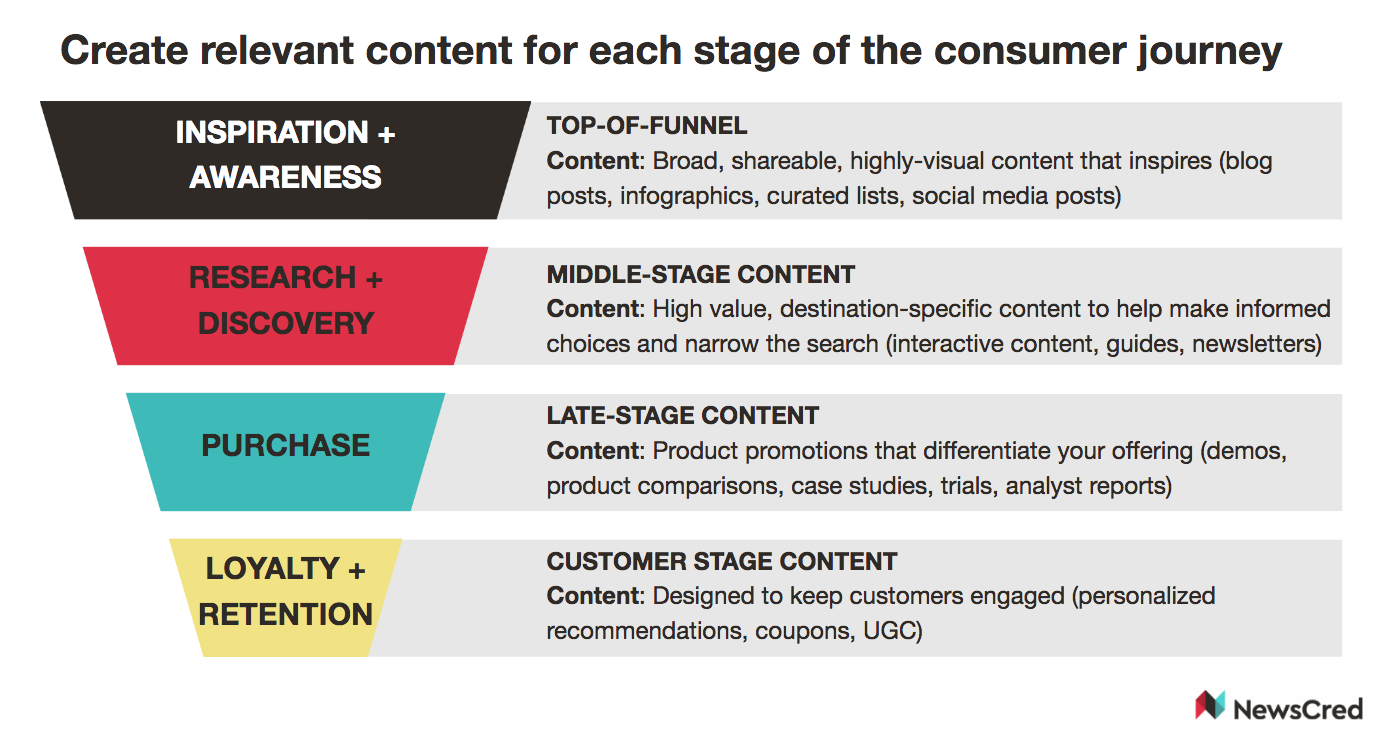
Within your content marketing strategy, you also mapped content types to the buyer journey. Blog posts, infographics, and curated lists about topics that appeal to most of your buyer personas make up your top-of-funnel content; they will drive traffic and awareness. Your middle-of-funnel content may include interactive content designed to attract leads and newsletter sign-ups, thus increasing your engagement with potential customers. Bottom-of-funnel content might be product-focused as you move people closer to purchase.

Content mapped to the buyer journey.png

Along with content pillars and content types, the following factors will also influence your content marketing strategy and how you populate your editorial calendar:

Major marketing campaigns: What initiatives do you have planned for the year? This will impact your content calendar. For example, if you’re hosting an annual event, you’ll likely be writing articles to promote the event and drive audience acquisition. After the event, you’ll probably publish post-event content utilizing the access you had to industry leaders, photos, videos, data collected, and more.

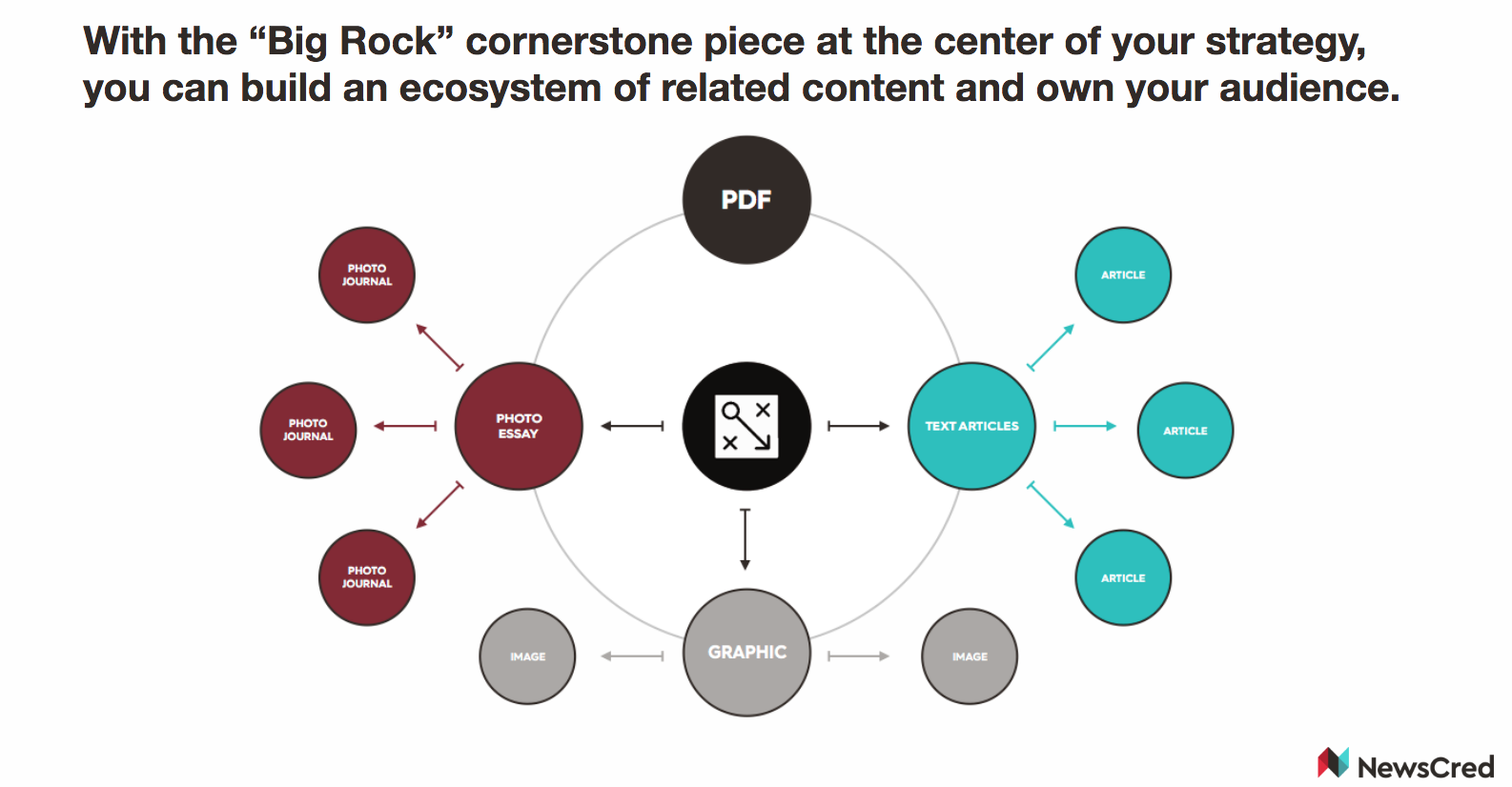
Big rock content: Big rock content is content that’s so epic that your audience can’t help but pay attention to it. Big rock content can be a short film, a feature film, an e-book, a printed book, or a whitepaper. 

big rock content_editorial calendar.png

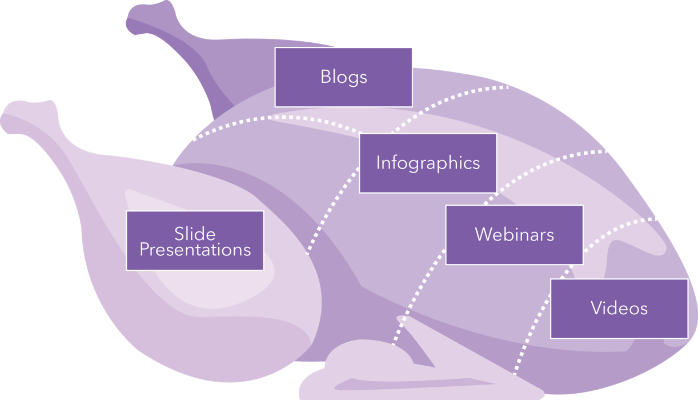
It requires a substantial investment to produce, but it’s almost always worth it because big rock content can drive major ROI in the form of increased brand awareness, leads, sales, and operational efficiencies. Once you’ve produced your big rock content, you can carve it up (like a Thanksgiving turkey) and distribute the assets on social media and other marketing channels to further promote the piece.

big rock content_turkey_editorial calendar 2.png

SEO content: What search terms are you seeking to own? This will further impact your content calendar, as you’ll want to regularly create long-form, SEO-optimized blog posts to try to rank for those keywords.

Seasonal content: What holidays or annual occurrences are important to your audience? And how far in advance will they be looking for content? SEO tools, like Google Trends, can help you find that information.

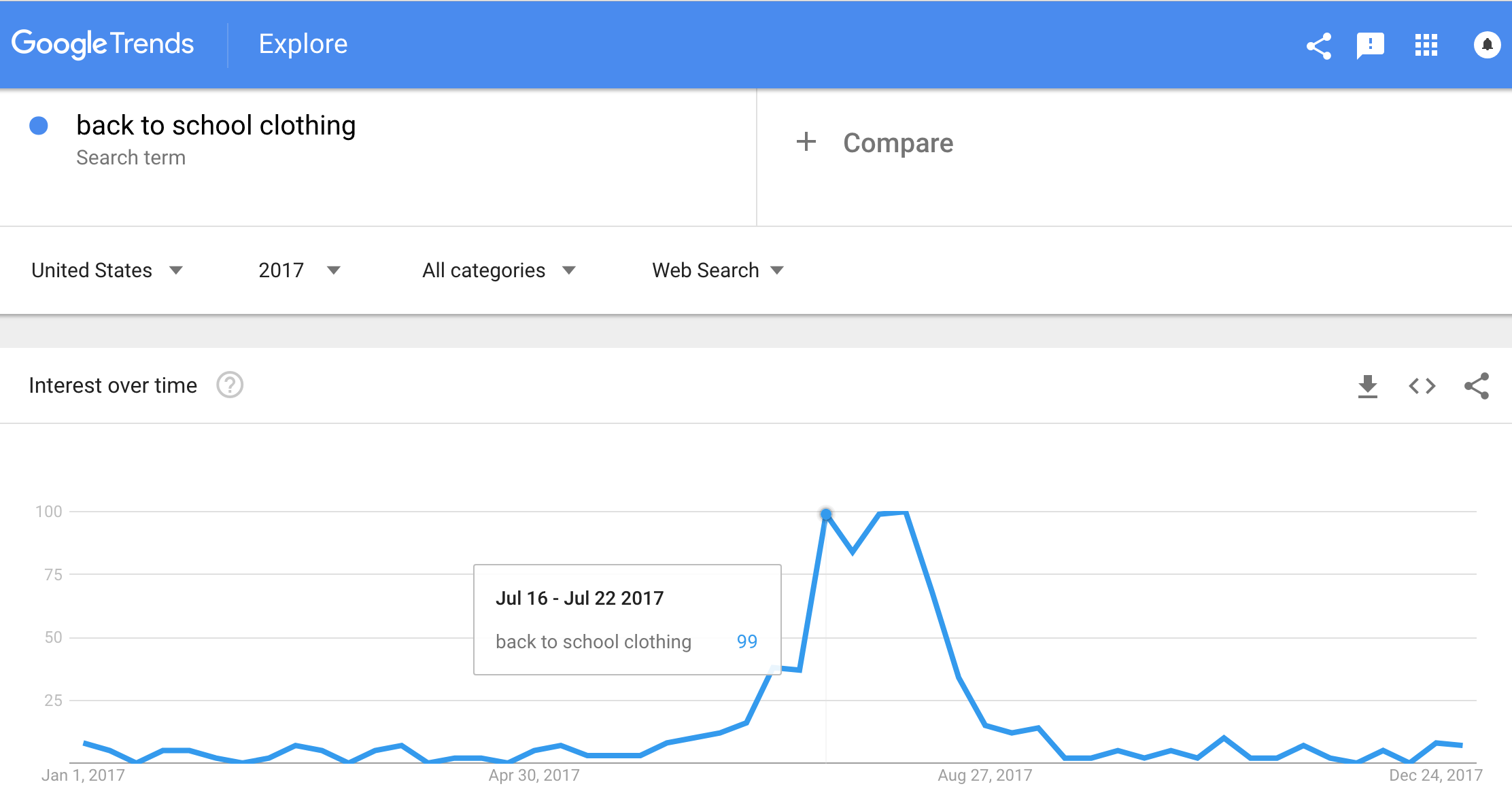
For example, if you’re a children’s clothing retailer, back to school is one of your most important seasons. According to Google Trends, searches for “back to school clothing” start spiking in mid-July – which means that you should start publishing content on that topic by the end of June so it’s available (and has had the chance to rank well) by the time people are actively seeking it out.

Google trends_editorial calendar.png

How do I come up with ideas for my editorial calendar?

Before you can start filling out your editorial calendar, you need to think up ideas. This is the fun part. You can either ideate on your own or with your team.

Hold a team brainstorm

Gather your key content marketing stakeholders for a team brainstorm. You can include your fellow marketing team members and subject matter experts (SMEs) from other departments.

To ensure that your brainstorm will be productive, structure it with an agenda. You might begin by walking people through your content pillars and content types, and then dedicate 10 to 20 minutes to brainstorm content for each pillar. In addition, it may be helpful to share thought-starters with attendees prior to the meeting; this will give them time to think independently and come prepared with ideas to discuss.

At the brainstorm meeting, make sure there’s a place to record ideas where everyone can see. This can be on a whiteboard, sticky notes, or a document that you type on and project in the meeting room. Once everyone has shared their ideas, group together similar ideas.

For example, say you’re a marketing company brainstorming ideas for your social media pillar. One person suggests a story about Instagram Stories, another person recommends an idea about influencer marketing, and a third person proposes a piece about the current state of hashtags. You might want to combine all of those ideas into a long-form piece entitled “The Ultimate Guide to Instagram Marketing.”

Research story ideas independently

You can also ideate on your own. 

Reading and researching will inform much of your ideation. Stay up-to-date with publications in your industry, general news, and the topics that your customers most care about. Create a dedicated place to store your ideas no matter how fully baked they are; you may need to research a topic more, but you don’t want to lose your idea.

How do I slot my ideas into my editorial calendar?

Once you have a lot of ideas to work with, start mapping out which ideas align with specific content pillars and content types, while taking into account major marketing campaigns, big rock content, SEO content, and seasonality.

It’s helpful to start with fixed dates. First, schedule content tied to holidays, annual occurrences, and major company or marketing initiatives, since you have a good sense of when you need to publish those articles. Then, schedule your big rock content and all the pieces that will result from that content; because of the investment big rock content requires, you may just have one piece per quarter or even one per year. After that, schedule your SEO content for the keywords that you most want to rank on; estimate one to two pieces per month (and don’t forget to check Google Trends to see if there’s an ideal time to publish those pieces).

Once you’ve scheduled all those pieces, slot in other stories. Of course, you won’t be able to populate those articles many months in advance, and you shouldn’t. In addition to having fixed pieces, you need the flexibility to publish other content, as needed, in order to respond to news, timely events, and pitches from writers and SMEs. Your calendar should always feel like a work in progress.

How much time should I allocate for each piece of content?

Each content type requires a different timeline, but it’s a good rule to work backward from your ideal publication time.

For a long-form blog post, for example, a writer may need one to two weeks to research the topic and write a first draft. An editor will need about a week to edit it and go back and forth with the writer with questions and revisions. The whole editorial process may take about three weeks.

On the other hand, if you’re creating an interactive e-book, you’ll need several months. A writer may need one month to research and write the first draft, and the editing and copyediting process will likely take two to three weeks. These types of projects often also require additional rounds of approvals from stakeholders, which may add on a few weeks. Plus, web developers and designers will be working concurrently, and their whole process will take several months. 

It’s always good to account for extra time for each step, as content production often takes longer than you originally intended. Stay in frequent contact with all your collaborators and make sure everyone knows their deadlines. (And don’t worry if you have to follow up; people usually appreciate the extra nudge or reminder about due dates.)

What happens after each piece of content goes live?

Promote it on social media, in your email newsletter, in internal company platforms, and other marketing channels. After all, distribution is necessary for content marketing success. Even if you’ve created a thoughtful editorial calendar and published incredible content, it won’t drive any substantial return for your brand unless you’ve actively promoted it. 

That said, be sure to measure the ROI of each piece. Where each piece falls on the funnel will determine your success metrics, ranging from pageviews for top-of-funnel blog posts, to sales, leads generated, or deals influenced for bottom-of-funnel content.


An editorial calendar can be one of a content marketer’s most useful tools. It exists to make every part of your job easier and more organized, so use it to your full advantage.


Heather Eng is NewsCred’s Executive Editor.

The post How to Create an Editorial Calendar for Content Marketing appeared first on Insights.


source https://thebtrade.com/2019/11/24/how-to-create-an-editorial-calendar-for-content-marketing/?utm_source=rss&utm_medium=rss&utm_campaign=how-to-create-an-editorial-calendar-for-content-marketing

Friday, 22 November 2019

NEW: Build a Comprehensive Local Marketing Report in Just 5 Minutes

How much time do you spend setting up marketing reports for a client or for your business?

A couple of hours? A whole day?

Well, in BrightLocal you can now do it in under five minutes!

That’s because we’ve just made a major upgrade to our Report Creation Wizard.

At BrightLocal, we’ve always been dedicated to simplifying the setup of marketing reporting, especially because many of our customers are building reports for multiple locations across multiple clients, and reporting on a wide set of different metrics, too!

We’re marketers ourselves, and we’ve experienced the pain of report setup first-hand when using other software. That’s why when we built the BrightLocal platform, we wanted to be able to automate as much of our report setup as possible, without compromising on the quality of insights.

In its first incarnation, Report Creation Wizard did a pretty good job of this, but we thought we could go faster. That’s why we’ve given it a complete facelift and performed some major tweaks under the hood to make it a smoother experience.

Now in just under five minutes you can create a multitude of marketing reports for a new location. We’re talking rank tracking, citation audits, reputation monitoring, GMB audits, competitor benchmarking and much more – all in under five minutes!

Don’t believe us? Then let’s see if we can convince you through the power of GIFs.


How to Create a Local Marketing Report in Just Five Minutes

The first step is to add a new location. Our GMB import and location finder make easy work of getting the correct business location data into our platform.


Now we have the business imported, we’re going to select the reports we want to create. Why settle for one report, when you can have five?!


From here we can also connect our Google My Business listings and Facebook Pages to BrightLocal in just a few clicks.


Next up, we need to add some readymade keywords to track. Don’t worry if you don’t have these to hand, you can always add them later.


Okay, I’m feeling pretty competitive, so let’s add a couple of competitors to track, too.


Now Report Creation Wizard is busy going to work finding listings from this business on all the top citation sites. We’re scanning nearly 40 different websites for you, so it’ll take a minute or two. The perfect chance for a little breather!


And there we are, your report setup is complete. In just a few more minutes, you’ll start to see real-time marketing data in your newly created Location Dashboard. 


We’re really proud of this upgrade to Report Creation Wizard. Being able to shave just a few minutes off the time our customers spend doing somewhat repetitive tasks is going to make a real difference. We believe every minute we can save a customer is a minute they can spend doing impactful work to improve their marketing results. 

This is the first of many small, but impactful improvements we’re making to our platform that we’ll be announcing as they go live.

For now, why not see how quickly you can set up your local marketing reports in Report Creation Wizard?

The post NEW: Build a Comprehensive Local Marketing Report in Just 5 Minutes appeared first on BrightLocal.


source https://thebtrade.com/2019/11/22/new-build-a-comprehensive-local-marketing-report-in-just-5-minutes/?utm_source=rss&utm_medium=rss&utm_campaign=new-build-a-comprehensive-local-marketing-report-in-just-5-minutes

Thursday, 21 November 2019

TikTok: The Clock is Ticking for Forward-Thinking Marketers

By now, you’ve probably heard of social media’s newest kid on the block, TikTok. But if you haven’t heard of the booming video-sharing app, you’re not alone. The newcomer to the scene has found its growth through the early adoption of young audiences — 60 percent of US TikTok users are between 16 and 24 years old (and in some cases, users well below the minimum 13-year-old age requirement).

Whether you’ve heard of the app or not, it’s time to take notice. In the past year, TikTok has emerged as a social media giant, beating Facebook, Instagram, YouTube, and Snapchat in monthly installs in September 2018, and clocking over a billion downloads total in the same year. The app has become so popular that Facebook even quietly launched a competitor called Lasso in November 2018 — all this while still flying under the radar of even the most digitally savvy consumers.

It’s clear TikTok has taken off with millennials and Gen Z users, but are brands using it, too? TikTok only recently added advertising and hyperlinking capabilities to the platform. However, some early-adopting brands are effectively using TikTok to engage younger audiences and boost brand awareness through quirky, quick-hit content. 

To understand if TikTok should be part of your social media strategy, let’s first look at what it is and why it has gained rapid popularity.

Inline Signup CTA-V1.png

What is TikTok?

TikTok functions by providing seamless video editing capability, intuitive shareability, and tapping into our mysterious love of bizarre humor and cringe-worthy performances — it’s essentially a digital, shareable, endless karaoke bar in your cell phone. TikTok users film themselves lip-syncing or performing comedic sketches in videos that are up to 15 seconds long, and can tap into a database of songs, sound bites, and effects. Users can even upload their own sounds, giving other users the ability to lip-synch to their original video. Similar to Instagram’s live video feature, TikTok users can even collaborate in a duet format by replying to each other’s videos. Duets then display in a split-screen which other users can then respond to, creating an endless chain of reaction videos.

All of these capabilities have translated into a powerful tool for content creators. Unsurprisingly, part of the app’s extreme popularity with young users is its ability to create viral sensations like dance challenges and obscure memes. To gain an idea of the stardom potential of TikTok, consider 20-year-old Montero Hill, otherwise known as Lil Nas X. After digitally releasing his now-certified hit “Old Town” Road and promoting it with relatively little success via other platforms, Lil Nas X uploaded his song to TikTok, where it sparked a chain of reaction videos with the hashtag #yeeyeejuice. What started as a meme ended up going so viral that record labels took notice, sparking several remixes featuring international stars like Billy Ray Cyrus, BTS, Young Thug, and Mason Ramsey. The rapper eventually signed with Columbia Records, and “Old Town Road” went on to become the longest-running number-one song in Billboard Hot 100 history, holding the spot for 19 weeks.

TikTok is unique in that its users regularly describe it as “a positive, fun space.” The functionality of the platform promotes democratization, and that has amounted to a significant failsafe against bullying culture. Rather than the pristine, curated aesthetic that tends to dominate platforms like Instagram, TikTok’s community of everyday, earnest non-celebrities sharing humiliating videos of karaoke fails and viral challenge attempts almost create a culture of radical acceptance. Additionally, TikTok features a discovery page with posts that rely not on follower count, but on trends and popular jokes, which gives users a more equitable opportunity at fame. Even though TikTok’s video view count is visible only to the original poster, videos featured on the “For You” page (the home feed that showcases the platform’s best content) can receive anywhere from 50,000 to over 1 million likes. This is a huge opportunity for brands to connect with the younger generation in a way that matches their values: real, raw, and relatable.

3 TikTok tips for brands

While there is no secret sauce for creating viral content, a lot of highly-shareable content has one element in common: audience participation. From Lil Nas X to the ALS challenge, it’s clear today’s digitally savvy audiences want to actively engage with their favorite brands, artists, or causes. Here are three ways you can test out TikTok and quickly identify whether the platform is a complementary fit for your existing integrated marketing efforts.

  1. Post a challenge: Brands looking to gain an audience on TikTok could post challenges that encourage users on the meme-friendly app to post their own videos in response. For example, Chipotle’s #guacchallenge is the platform’s highest-performing brand challenge to date, proving the brand’s investment in TikTok is paying off.
  1. Share your brand’s softer (or goofier) side: Many companies use Instagram or Facebook to present a highly curated view of their brand, or to share educational, valuable content. TikTok gives brands the opportunity to show a more personal, casual, and relatable behind-the-scenes look at their business.
  2. Be experimental: With its relatively recent soar in popularity, it’s a bit early for tried-and-true best practices for TikTok to exist. That being said, it’s your opportunity to go out on a limb — what can you do to engage this emerging audience? Test early and often and if it doesn’t pay off, don’t be afraid to stick to what you already know works best for your brand.

The future: marketing with TikTok

For now, TikTok is in its gold rush phase. The app’s still relative infancy in the celebrity and influencer world, combined with its massive network of surprisingly addictive humor and resulting reactions and meta-reactions, make it a diamond mine for creators and brands alike. Early adopters who have already amassed a large following have begun to partner with brands. Similarly, celebrities like Will Smith and Amy Schumer have become early celebrity adopters, which will no doubt result in brand partnership opportunities.

Anywhere media garners impressions you’ll find brands willing to partner, and the timing is right for TikTok. The app’s owner, Bytedance, has even claimed that in 2018, the Chinese version of the app added a “Shop Now” feature that generated $29 million in a single day. Those kinds of numbers mean that e-commerce is a sure consideration for the American version of the app and another possible area of revenue for forward-thinking brands.

While it’s wise to think strategically before embracing every new technology and platform, TikTok’s popularity indicates it might be time to start thinking about ways to creatively integrate the platform into your content marketing and strategy plans.


Afika Nxumelo is a NewsCred Contributor.

The post TikTok: The Clock is Ticking for Forward-Thinking Marketers appeared first on Insights.


source https://thebtrade.com/2019/11/21/tiktok-the-clock-is-ticking-for-forward-thinking-marketers/?utm_source=rss&utm_medium=rss&utm_campaign=tiktok-the-clock-is-ticking-for-forward-thinking-marketers

Tik Tok: The Clock is Ticking for Forward-Thinking Marketers

By now, you’ve probably heard of social media’s newest kid on the block, TikTok. But if you haven’t heard of the booming video-sharing app, you’re not alone. The newcomer to the scene has found its growth through the early adoption of young audiences — 60 percent of US TikTok users are between 16 and 24 years old (and in some cases, users well below the minimum 13-year-old age requirement).

Whether you’ve heard of the app or not, it’s time to take notice—in the past year, TikTok has emerged as a social media giant, beating Facebook, Instagram, YouTube, and Snapchat in monthly installs in September 2018, and clocking over a billion downloads total in the same year. The app has become so popular that Facebook even quietly launched a competitor called Lasso in November 2018 — all this while still flying under the radar of even the most digitally savvy consumers.

It’s clear TikTok has taken off with millennials and Gen Z users — but are brands using it, too? TikTok only recently added advertising and hyperlinking capabilities to the platform. However, some early-adopting brands are effectively using TikTok to engage younger audiences and boost brand awareness through quirky, quick-hit content. 

To understand if TikTok should be part of your social media strategy, let’s first look at what it is and why it has gained rapid popularity.

Inline Signup CTA-V1.png

What is TikTok?

TikTok functions by providing seamless video editing capability, intuitive shareability, and tapping into our mysterious love of bizarre humor and cringe-worthy performances — it’s essentially a digital, shareable, endless karaoke bar in your cell phone. TikTok users film themselves lip-syncing or performing comedic sketches in videos that are up to 15 seconds long, and can tap into a database of songs, sound bites, and effects. Users can even upload their own sounds, giving other users the ability to lip-synch to their original video. Similar to Instagram’s live video feature, TikTok users can even collaborate in a duet format by replying to each other’s video. Duets then display in a split-screen which other users can then respond to, creating an endless chain of reaction videos.

All of these capabilities have translated into a powerful tool for content creators. Unsurprisingly, part of the app’s extreme popularity with young users is its ability to create viral sensations like dance challenges and obscure memes. To gain an idea of the stardom potential of TikTok, consider 20-year-old Montero Hill, otherwise known as Lil Nas X. After digitally releasing his now-certified hit “Old Town” Road and promoting it with relatively little success via other platforms, Lil Nas X uploaded his song to TikTok, where it sparked a chain of reaction videos with the hashtag #yeeyeejuice. What started as a meme ended up going so viral that record labels took notice, sparking several remixes featuring international stars like Billy Ray Cyrus, BTS, Young Thug, and Mason Ramsey. The rapper eventually signed with Columbia Records, and “Old Town Road” went on to become the longest-running number-one song in Billboard Hot 100 history, holding the spot for 19 weeks.

TikTok is unique in that its users regularly describe it as “a positive, fun space.” The functionality of the platform promotes democratization, and that has amounted to a significant failsafe against bullying culture. Rather than the pristine, curated aesthetic that tends to dominate platforms like Instagram, TikTok’s community of everyday, earnest non-celebrities sharing humiliating videos of karaoke fails and viral challenge attempts almost create a culture of radical acceptance. Additionally, TikTok features a discovery page with posts that rely not on follower count, but on trends and popular jokes, which gives users a more equitable opportunity at fame. Even though TikTok’s video view count is visible only to the original poster, videos featured on the “For You” page (the home feed that showcases the platforms best content) can receive anywhere from 50,000 to over 1 million likes. This is a huge opportunity for brands to connect with the younger generation in a way that matches their values: real, raw, and relatable.

3 TikTok tips for brands

While there is no secret sauce for creating viral content, a lot of highly-shareable content has one element in common: audience participation. From Lil Nas X to the ALS challenge, it’s clear today’s digitally savvy audiences want to actively engage with their favorite brands, artists, or causes. Here are three ways you can test out TikTok — and quickly identify whether the platform is a complementary fit for your existing content marketing efforts.

  1. Post a challenge: Brands looking to gain an audience on TikTok could post challenges that encourage users on the meme-friendly app to post their own videos in response. For example, Chipotle’s #guacchallenge is the platform’s highest-performing brand challenge to date, proving the brand’s investment in TikTok is paying off.
  1. Share your brand’s softer (or goofier) side: Many companies use Instagram or Facebook to present a highly curated view of their brand, or to share educational, valuable content. TikTok gives brands the opportunity to show a more personal, casual, and relatable behind-the-scenes look at their business.
  2. Be experimental: With its relatively recent soar in popularity, it’s a bit early for tried-and-true best practices of TikTok to exist. Use this open-space opportunity to go out on a limb — what can you do to engage this emerging audience? Test early and often and if it doesn’t pay off, don’t be afraid to stick to what you already know works best for your brand.

The future: marketing with TikTok

For now, TikTok is in its gold rush phase. The app’s still relative infancy in the celebrity and influencer world, combined with its massive network of surprisingly addictive humor and resulting reactions and meta-reactions, make it a diamond mine for creators and brands alike. Early adopters who have already amassed a large following have begun to partner with brands. Similarly, celebrities like Will Smith and Amy Schumer have become early celebrity adopters, which will no doubt result in brand partnership opportunities.

Anywhere media garners impressions you’ll find brands willing to partner, and the timing is right for TikTok. The app’s owner, Bytedance, has even claimed that in 2018, the Chinese version of the app added a “Shop Now” feature that generated $29 million in a single day. Those kinds of numbers mean that e-commerce is a sure consideration for the American version of the app and another possible area of revenue for forward-thinking brands.

While it’s wise to think strategically before embracing every new technology and platform, TikTok’s popularity indicates it might be time to start thinking about ways to creatively integrate the platform into your content marketing and strategy plans.


Afika Nxumelo is a NewsCred Contributor.

The post Tik Tok: The Clock is Ticking for Forward-Thinking Marketers appeared first on Insights.


source https://thebtrade.com/2019/11/21/tik-tok-the-clock-is-ticking-for-forward-thinking-marketers/?utm_source=rss&utm_medium=rss&utm_campaign=tik-tok-the-clock-is-ticking-for-forward-thinking-marketers

Wednesday, 20 November 2019

Grow Your Business | 4 Ways To Tap Into The Customer Power

Growing a business is not an easy task. You have to find the right balance of investment in tools to help you grow and investment in time to ensure success. It is very easy to waste hour after hour on in-person networking or social media without any sign of business growth. It is equally possible to invest heavily in paid advertising such as PPC without any return on investment.  

Despite growth being difficult, UK businesses have sustained some level of growth since 2000, although we should take note of the first fall in the business population since 2000. Whether you’re frustrated with your business growth efforts or not, you may be missing out on some of the more obvious ways of sparking significant and accelerated growth. 

Is your business proactive in following up with existing or former customers? Existing customers could be your gateway to significant business growth. Rather than focusing on simply selling to them, smart business owners are working to position existing customers as advocates, champions of your brand willing to share and recommend their thoughts and feelings about your products or services.  

A strong customer advocacy strategy embedded within your content marketing strategy can combine with your digital marketing efforts, as well as leveraging the power of MarTech. This creates a comprehensive and effective system that allows you to speed up the customer journey and sales cycle, while still keeping your customers engaged and interested. Both time and money can be saved simply by tapping into those individuals who are already engaged with your brand. Let’s take a look at four ways you can tap into the power of your customer base and grow your business.

Co-Speaking

Many businesses conduct almost all their marketing online but there is a huge opportunity being missed that should be part of all successful customer marketing programs. Presenting at trade shows, exhibitions and conferences alongside a loyal customer is a growing trend and one which can really create a story and buzz around your brand.  

Presenting with a satisfied customer is a great way to showcase how you’ve helped them overcome a challenge or succeed in a campaign. It’s also an implicit way to demonstrate how your brand fosters and nurtures customer relations. After all, if the service you provide (or the relationship itself) is poor, then the customer wouldn’t be stood there with you! 

Public speaking opportunities are also a way to enhance your brand awareness directly with the customer you’re speaking alongside but also with others. What’s more, delegates are much more likely to attend a workshop or presentation if there’s something to be learned about the customer journey FROM the customer, and not just the brand. It’s a potent opportunity to generate leads and prospects

In a previous role as Director, Global PR, Social Media and Comms, I co-presented with a spokesperson from a customer that everyone has heard of: Paddington Bear. I dare say that it would not have been a packed and overflowing audience had it just been me talking about social media trends.  

Indeed, the Q&A afterward focused mostly on how the Paddington Bear brand had accelerated its engagement, digital community size, and click-throughs from social media. The Q&A alone provided the most valuable part of the presentation for my company – the customer explained how we’d played a key role in their social media evolution, and we received leads off the back of this! 

Bringing your customers to the live platform shows the wider audience just how committed and strong your customer relationships are. This, in turn, helps to reinforce reputation and credibility, as a third party (your customer) can back up your claims about your business. 

Reviews

What do you do when looking into a new company, product or service? You look for impartial reviews. Key factors in the buying process are finding out what other people think about a product or service and discovering what experiences with a brand are like – whether those reviews are good or bad.  

Most businesses find themselves lucky in that they will receive some spontaneous customer reviews but they rarely come through in a constant stream. While you certainly can’t force customers to leave reviews, you can ask and hope it delivers results.  

Dependent on your customer relationship you may choose to ask them in person, you may ask via email, or you may pop a review request through on Skype, a similar channel or even as an additional line in your invoice. There are many original and creative ways you can request reviews and as old age goes, “If you don’t ask, you don’t get!” 

There’s a really useful and comprehensive breakdown of seven golden rules to gain more customer reviews that I encourage you to check out. They’re for the niche industry of dentistry, but the rules can be applied to pretty much any business in any line of work. Reviews can also give your business a boost with the search engines.  

Google reviews appear in the Google Knowledge Graph which sits to the right of the search results, publicly displaying exactly how popular (or unpopular) your business is with customers. The higher the volume of high ratings you have, the more credibility your business gains. 

Testimonials

There aren’t many more tried and tested methods than the classic testimonial – the trusted case study. Even before online marketing existed, businesses would display and share testimonials from their customers on-site in their businesses. Testimonials are quick, to the point, and highly effective. Testimonials can be single lines or they can be extremely in-depth.  

You may choose to have a simple-but-effective dedicated Testimonials page on your website or you may share them liberally across your online channels incorporating them into product or service descriptions and more. Case studies and spotlights on companies you partner with are an extended form of the standard testimonial too.  

Testimonials can also be great content for blog posts and articles, giving you more of a chance to explore the depths of the comments and explore the positives of your relationships with your individual customers. Testimonials can even be in video format as CodeAcademy show with their “Stories”, while Bluebeam offers a mixture of video, written and individual customer stories in their “In action” section, which again stands out as something a little different. Getting creative with your testimonials can help to draw in new customers as well as making your existing customers even more proud and likely to advocate their commitment to your brand. 

Webinars

Webinars, having fallen out of favor a few years or so back, are rightly seen as a key marketing and sales tool for many businesses looking to keep their existing customers engaged and generate more leads as well. Their value continues to grow and with the right planning and promotion, they can be a hugely valuable source ROI vehicle. Full analysis and effective follow-ups with a targeted focus is also essential to get the desired ROI from webinars.  

Webinars are also another effective channel for co-speaking with your customers. Bringing one or two onboard for a webinar or two can strengthen customer relations while also providing a lot of content to re-use and re-purpose. It gives you a further chance to show exactly how you help your customers and the benefits your product or service has offered to them. The period after a webinar is almost as important as the “event” itself as you have to be ready with follow-ups and give both yourself and your co-speaking customer the chance to respond quickly and insightfully.  

Don’t forget when promoting your webinar to ask your co-speaking customer to share via social media, email and pigeon post too, to further amplify your reach. Webinars also give you the chance to link back to your best testimonials as they can simply be slotted (with relevance) into the deck. You need a true end-to-end plan for a successful webinar

Your existing customers can be your biggest advocates and most important fans. Even a small number of truly dedicated customers will soon lead to business growth, especially if you make the most of them. 

The post Grow Your Business | 4 Ways To Tap Into The Customer Power appeared first on Marketo Marketing Blog – Best Practices and Thought Leadership.


source https://thebtrade.com/2019/11/21/grow-your-business-4-ways-to-tap-into-the-customer-power/?utm_source=rss&utm_medium=rss&utm_campaign=grow-your-business-4-ways-to-tap-into-the-customer-power

What SEO Means on Amazon and How Brands Can Make the Most of It

Amazon is many things—including a search engine.

And when it comes to product queries, consumers flock to it. Research from Amazon optimization platform Feedvisor shows 66% of consumers typically start their searches on Amazon when they’re looking to buy a product or researching what to buy.

Yet, while the art and science of search engine optimization, or SEO, has been around for more than 20 years to help brands boost their rankings on sites like Google and Bing, optimizing specifically for Amazon is a more recent phenomenon.

According to Jon Maxson, senior director of SEO at digital marketing agency iCrossing, brands have started to devote more attention to their Amazon strategies in the past few years as it has become a more popular destination for search and also because Amazon has started to give marketers more tools to optimize product pages and more sophisticated ad-buying opportunities.

And while Amazon’s and Google’s algorithms are “fundamentally similar in that they are trying to return the most relevant results for a particular search query,” Maxson said, search on Amazon has a much clearer intent: to buy something.

“Amazon is not only concerned with what’s most relevant, but also what sells the best,” he said.

As a result, a “conversion-first mentality is critical for success,” Maxson said, and brands should spell out the value of a product to consumers to help make their buying decisions easier. That starts with keyword research but also includes deciding where to put those keywords in product titles and page copy.

S is for stuffing

According to Amazon, brands should focus on creating content with keywords that match customer queries as much as possible. In its guidelines, the platform says providing relevant and complete information for products can increase visibility and sales.

Mark Irvine, director of strategic partnerships at search marketing company WordStream, said because factors such as price, availability and selection are largely out of the control of SEO agencies, most focus on content. And that, he said, is why a search for “black umbrella” yields a listing with the title “Umbrella Windproof Travel Umbrella Compact Folding Reverse Umbrella, Lanbrella,” a bulleted list that uses the keyword “umbrella” nine times and a product description that includes the keyword 40 times.

Maxson noted this practice of stuffing in as many keywords as possible was once a common tactic on Google, which now penalizes sites for it because keyword stuffing degrades the user experience.

But it’s not so cut-and-dried on Amazon. Sales are the No. 1 goal, so brands that stuff keywords into product titles and pages may initially be more visible, but if the pages are unreadable, conversion rate can suffer. And, of course, brands that sell fewer products lose visibility. So, Maxson said, SEOs have to play around with keyword placement on Amazon to strike the right balance.

Sellers who have been approved as brand owners through the Amazon Brand Registry process can also access what Amazon calls its A+ Content feature, which lets brands change product descriptions and describe features in a different way by including a unique brand story, enhanced images and text placement. Amazon says A+ content can boost conversion rates, traffic and sales.

Leo Carrillo, associate director of Amazon and Marketplace growth at digital marketing agency Tinuiti, said Amazon recently launched another tool, Manage Your Experiments, which lets brands A/B test how their content affects conversion rate and what changes when they add features like A+ content. But, he said, it’s too early for any takeaways for brands because the tool is too new.

E is for exact

Riyaad Edoo, Unilever U.S., search and ecommerce lead at media and marketing services company Mindshare, said brands should “never really concentrate on just SEO for [their] product detail pages.”

Instead, brands should make sure everything is exactly right in their listings and focus on conversion rate optimization, which includes filling out all information on the product page, including warnings and ingredients; image sequencing, or the practice of optimizing the order of brand images by testing hero images to ensure that click-through rate is high from search engine results pages; and analyzing information from product reviews and the questions consumers ask to determine how they feel about a product and the information brands should convey.

Other factors that affect rankings on Amazon include how quickly a product sells for a given keyword relative to other similar products; mass relevancy, or the number of keywords relevant to a given product; fulfillment by Amazon; Prime eligibility; and designations like Amazon’s Choice.

O is for one algorithm

Another key difference: Google has two algorithms, one for organic search and another for paid search, which use different inputs. For organic search, Google’s ranking factors include keyword relevancy, site content, page speed, and mobile-friendliness. For paid search, inputs include bid amount and budget remaining in a given day as well as ad settings like geography and dayparting, or scheduling ads for specific times day. That’s according to Elizabeth Marsten, senior director of strategic marketplace services at Tinuiti.

Amazon, on the other hand, has just one algorithm, Marsten said. It is called A9.

Ads are not a ranking factor on Amazon, and brands don’t need to buy them to rank well organically. At the same time, ads increase consumer interaction with products, which boosts views and sales, and that does affect rankings, she added.

“Technically, you can increase your organic rank [with those tactics], but we all know if you throw gas on the fire, it tends to burn a little hotter,” Marsten said.

She said it also depends on the brand—a well-known brand consumers search for by name won’t have to spend as much on advertising, but lesser-known brands with a lot of competition can stand out with ads.

Walmart, on the other hand, recently launched a self-serve ad platform and explicitly states in its advertising FAQs that paid advertising will help increase organic rankings over time.

“I think [Walmart] works similar to Amazon as well: If you buy ads, you get more eyeballs faster, which starts to kick off the domino effect,” Marsten said.

To date, there hasn’t been as much innovation in ad formats or complexity on Amazon as there has been on Google, but Marsten said we’ll continue to see it evolve and, like Google, Amazon will realize the value of additional ad real estate on its search engine results pages, or SERPs, and continue to try to monetize them.

In the next year, Marsten said, Amazon will place more emphasis on expanding beyond the product detail page and creating brand experiences by giving key brands more control to use their own creative assets.

“Going into next year, I would be concerned with brands whose Amazon SEO strategies are strictly copy based,” Edoo said. “If you have keyword-attributable, velocity-based SEO strategies in conjunction with media, I would rethink approaches based on new weightings. Most of that will be important for the holiday season as well.”

Meanwhile, Google may take a page from Amazon’s playbook. Maxson said he expects to see the search engine shift to more of a conversion-first mindset of its own based on the amount of commerce that has moved to Amazon.

“I think Google is now paying more attention to what users click on in search results—are they happy with the experience on sites or bouncing back?” he said. “We’ll see that conversion-first mentality migrate back to Google because of Amazon’s success.”


This article was written by Lisa Lacy from Adweek and was legally licensed through the NewsCred publisher network. Please direct all licensing questions to legal@newscred.com.

The post What SEO Means on Amazon and How Brands Can Make the Most of It appeared first on Insights.


source https://thebtrade.com/2019/11/20/what-seo-means-on-amazon-and-how-brands-can-make-the-most-of-it/?utm_source=rss&utm_medium=rss&utm_campaign=what-seo-means-on-amazon-and-how-brands-can-make-the-most-of-it